Fighting with Husband During Pregnancy? How to Stop and Reconnect
Why Do Couples Fight More During Pregnancy?
"Since getting pregnant, we've argued more than in our previous three years combined."
This isn't an isolated case. Research shows that 67% of couples experience decreased relationship satisfaction during pregnancy and the first year postpartum.
Common Triggers
| Type | Typical Scenario | Underlying Cause |
|---|---|---|
| Housework | "You never help with chores" | Misaligned expectations |
| Baby prep | "I'm the only one buying things" | Unequal involvement |
| Lifestyle | "You're still gaming?" | Priority conflicts |
| Emotions | "You don't understand how tired I am" | Lack of empathy |
A Scientific Framework for Division of Labor
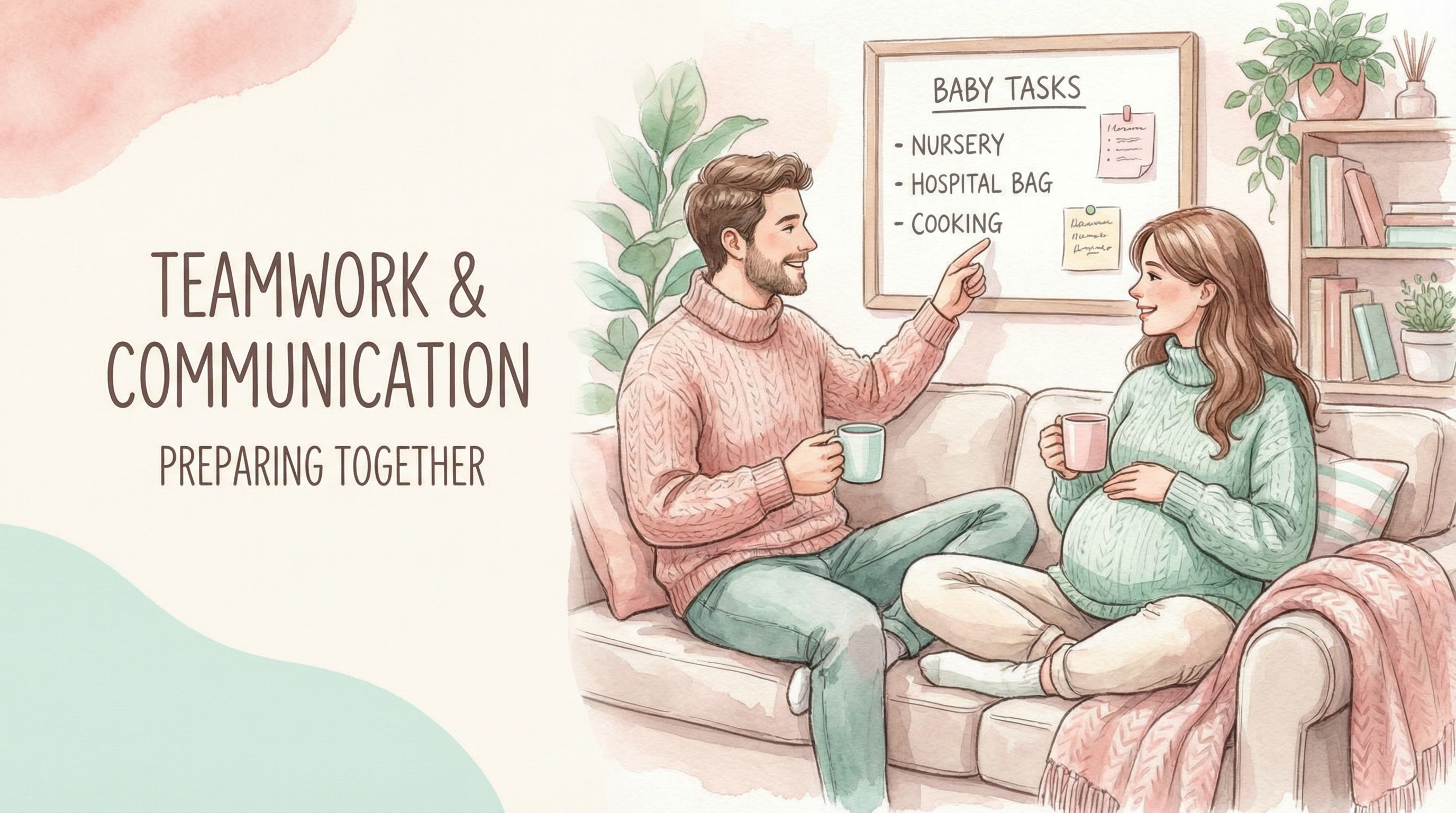
Step 1: Adopt the "Family Project" Mindset
Treat baby preparation as a project both partners own equally, not "wife leads, husband assists."
Wrong approach:
Wife: Research → Decide → Execute → Nag husband
Husband: Passive compliance → Feel annoyed → Half-hearted effort
Right approach:
Together: Discuss needs → Divide responsibilities → Execute separately → Check on each other
Step 2: Define Clear Boundaries
Don't vaguely say "let's prepare together." Be specific about who does what.
Recommended Division:
| Task Category | Suggested Lead | Reasoning |
|---|---|---|
| Medical (checkups, hospital) | Both, wife leads | Requires her presence |
| Big purchases (stroller, crib) | Both, husband leads | Physical work + research |
| Daily supplies | Both, wife leads | Better understands usage |
| Home modifications | Husband leads | Physical labor involved |
| Documentation/paperwork | Husband leads | Running errands |
| Budget management | Both equally | Financial transparency |
Step 3: Establish Check-in Meetings
Schedule a weekly "baby prep meeting" for 15-30 minutes:
- Review: What got done last week
- Check: What's blocked
- Plan: What each person will do next week
- Adjust: Does the division need tweaking
Effective Communication Techniques
"I" Statements vs "You" Statements
❌ "You never handle any of this" ✅ "I've been feeling overwhelmed and need you to take on some tasks"
❌ "All you do is play on your phone" ✅ "I'd like us to discuss prep stuff together in the evenings"
Be Specific
❌ "You need to care more" ✅ "Could you research crib brands this week?"
❌ "You don't care about me" ✅ "I'd like you to take time off to come to my prenatal checkup"
Give Timely Feedback
After completing tasks, express appreciation promptly:
- "Great job assembling the crib today, thank you"
- "Your stroller research was so thorough, saved me tons of time"
Solutions for Common Conflict Scenarios
Scenario 1: Out of Sync Progress
Problem: Wife has been researching bottles for a week; husband doesn't know bottles need to be bought.
Solution:
- Create a shared preparation checklist
- Sync progress weekly
- Both should understand major purchases before buying
Scenario 2: Different Spending Philosophies
Problem: One wants brand names, the other thinks it's wasteful.
Solution:
- Set the budget first, then choose products
- Categorize: what must be quality, what can be saved on
- Respect each other's bottom-line needs
Scenario 3: Extended Family Involvement
Problem: Both sets of parents have opinions; couple caught in the middle.
Solution:
- Principle: Align as a couple first, then communicate outward
- Each person handles their own parents
- Establish "nuclear family comes first" boundaries
Emotional Management Tips
Pregnant Women's Mood Swings Are Normal
- Hormonal changes cause emotional sensitivity
- Physical discomfort creates anxiety
- Worries about the future
What husbands can do:
- Accept the emotions; don't rush to fix everything
- Say more "I understand," less "don't overthink it"
- Proactively ask about physical well-being
Husbands' Stress Needs Recognition Too
- Financial pressure (provider anxiety)
- Discomfort with role transition
- Feeling overlooked
What wives can do:
- Learn about his concerns
- Share excitement and anticipation
- Acknowledge his contributions
When to Seek Outside Help
If these situations persist, consider professional support:
- Silent treatment lasting over a week
- Personal attacks or belittling
- Significantly impacting daily life
- Thoughts of separation
Options to consider:
- Pregnancy counseling
- Couples therapy
- Prenatal classes (attend together)
Conclusion: Good Division of Labor Lubricates Relationships
Baby prep isn't a test—it's practice. Practice cooperating under pressure, handling disagreements, and facing challenges as a team.
These skills become even more critical after your baby arrives.
Remember three principles:
- Shared ownership: Not "helping"—jointly responsible
- Clear division: Ambiguity breeds conflict
- Timely communication: Don't let small issues snowball
Use Baby Checklist's collaboration features to make your division of labor crystal clear and efficiently prepare together!