Having a Winter Baby? What Your Hospital Bag Really Needs
My second baby came in January. During a snowstorm. Fun times.
The hospital was fine - they're always heated, you'll be comfortable. But getting there? Getting home? Dealing with a newborn in freezing temperatures? That required more planning than my summer baby ever did.
If you're due between November and February, here's what you actually need to think about.
The Hospital Itself Is Easy
Let's start with the good news: the hospital will be warm. You don't need to pack like you're going camping in Antarctica.
Inside, you'll wear pretty much the same stuff as any other season:
- Comfortable pajamas or labor clothes
- A robe
- Slippers
- Your usual toiletries
The difference is everything that involves going outside.
What to Pack for Mom
Hospital stuff (not winter-specific):
- Nursing pajamas or comfortable clothes (2-3 sets)
- Nursing bras
- Toiletries
- Slippers with grip
- Phone charger
- Snacks
Winter-specific:
- A warm, loose coat that's easy to put on (you'll still look pregnant)
- Hat and scarf
- Warm socks (your feet get cold postpartum)
- Warm slippers with real soles (the walk to the car)
- A blanket from home (hospitals keep thin ones)
- Lip balm (heated air is dry)
- Lotion (your skin will be dry)
The going-home outfit matters more in winter. You're going from heated hospital to cold parking garage to car. Have real shoes - not flip-flops, not slippers. A coat that actually zips or buttons. You'll feel awful and want to be warm.
What to Pack for Baby
Here's where it gets tricky.
For the hospital:
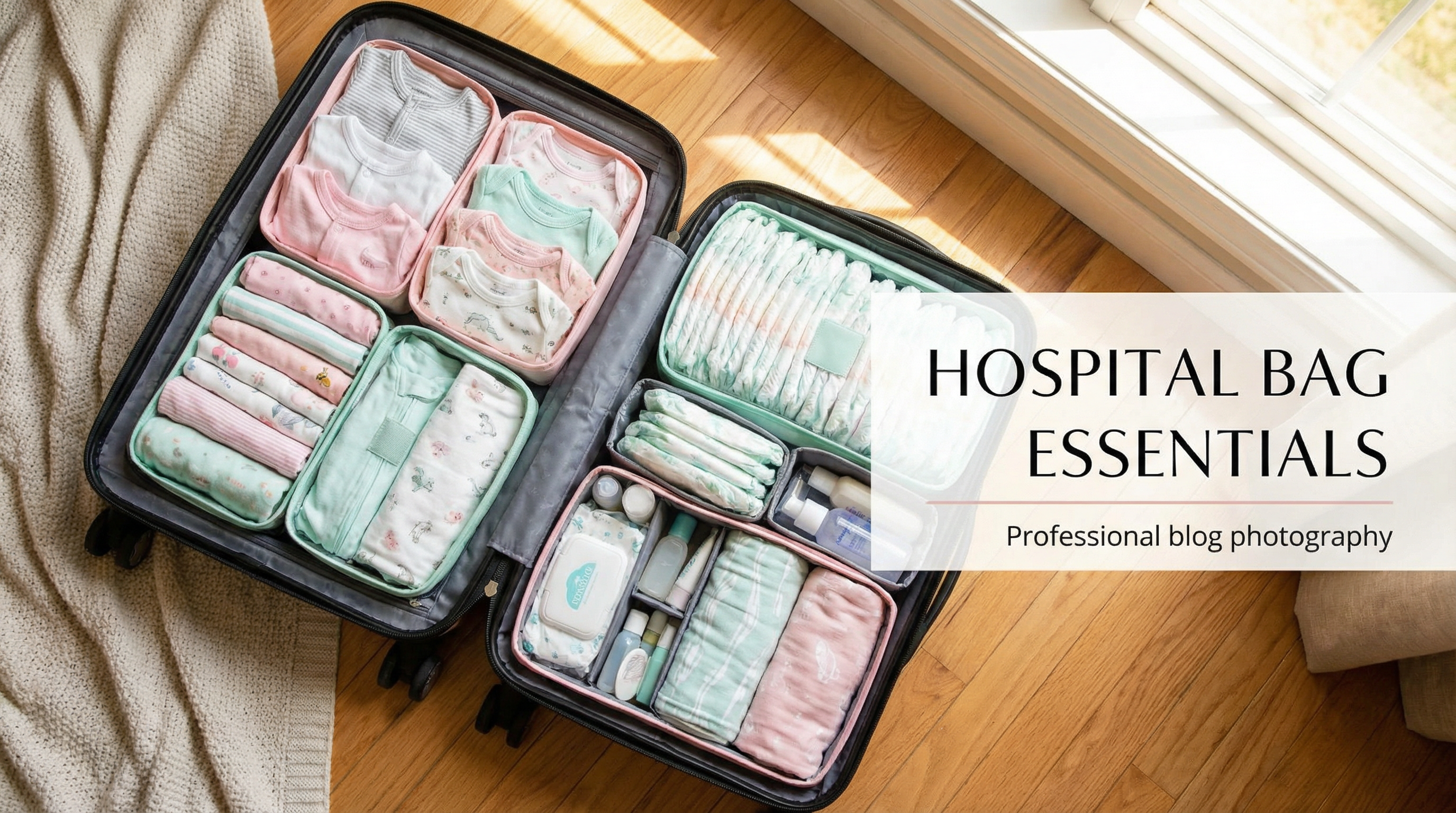
- Regular onesies or sleepers (3-4)
- Hats (always need hats)
- Socks
- Light receiving blankets
The hospital is heated. Baby doesn't need snowsuits inside. Normal baby clothes work fine.
For going home:
- A warm outfit (footed sleeper or similar)
- A warm hat
- A thick blanket
- Socks
- Car seat cover or blanket to put over the seat
The Car Seat Winter Problem
This is important. Pay attention.
You cannot put baby in a puffy coat or snowsuit in the car seat.
I know it seems wrong. It's freezing outside, baby should be bundled up, right?
Wrong. Here's why: in a car accident, puffy clothing compresses. The straps that seemed tight are now loose. Baby can be ejected from the seat. This is a real safety issue, not paranoid parenting.
What to do instead:
- Dress baby in thin layers (no bulky coat)
- Buckle baby into car seat with straps snug against their body
- Put a blanket OVER the buckled baby
- Or use a car seat cover that goes over the outside of the seat
Pre-warm your car. Start it 10-15 minutes before you leave. This way, baby doesn't need to be dressed for a blizzard - the car is already warm.
Getting Home
Plan your exit carefully:
- Have someone warm up the car way before you leave
- Dress baby in normal clothes, bring a warm blanket
- Walk quickly from hospital to car
- Baby goes in pre-warmed car seat with blanket over them
- Drive home, carry baby inside quickly
- Remove outdoor layers gradually inside
The whole process is like 10 minutes of cold exposure max. Baby will be fine.
Once You're Home
Your house should be ready for a newborn in winter:
Temperature: Keep it around 68-72°F (20-22°C). Babies don't need it super hot, and overheating is actually more dangerous than being a little cool.
Humidity: Heated air is dry. A humidifier helps everyone - baby's skin, your skin, your sinuses.
Baby's sleep space:
- No loose blankets in the crib (SIDS risk)
- Use a sleep sack or wearable blanket instead
- Keep the room cool enough that you'd be comfortable in light pajamas
- Dress baby in one more layer than you'd wear
Night Feeds in Winter
This is the part nobody warns you about. It's 3am, it's cold, and you have to get up.
Some things that help:
- Keep a warm robe next to your bed
- Have a shawl or cardigan nearby for nursing
- If bottle feeding, a bottle warmer in your room saves trips to the kitchen
- A small heater in the nursery (not too close to the crib)
- Slippers by your bed
You will be tired and cold. Make it as easy as possible on yourself.
Common Winter Baby Questions
How do I know if baby is too cold?
Feel the back of their neck or their tummy. Should be warm, not hot or cold. Hands and feet are always cooler than the body - that's normal. If baby's neck feels chilly, add a layer.
Can I take baby outside in winter?
Yes, but briefly. Babies shouldn't be out in really cold weather for long. Quick walks are fine - dress them warmly, cover the stroller, don't stay out long. The pediatrician office counts as "outside" - dress accordingly.
My house is dry and baby's skin is cracking. What do I do?
Run a humidifier. Use gentle, fragrance-free baby lotion after baths. You don't need to bathe newborns every day - 2-3 times a week is plenty. Apply thick cream or petroleum jelly to really dry spots.
How often should I bathe a winter baby?
Less than you think. Bathing dries out skin, which is already dry from heated air. Every 2-3 days is fine for newborns. Spot-clean diaper area and face daily.
The Upside of Winter Babies
I won't lie - winter births require more planning. But there are perks:
Perfect excuse to hibernate. Nobody expects you to go anywhere. You're supposed to stay home, rest, and bond with your baby. In summer, people want you to come to things. In winter, everyone leaves you alone.
No bugs. Summer means mosquitoes, flies, and figuring out how to keep insects off baby. Winter? Nope.
Better sleep. Babies tend to sleep better when it's not hot. Dark winter evenings make sleep training easier later.
Cozy vibes. There's something really nice about snuggling a newborn while it's cold outside. Hot drinks, warm blankets, nowhere to be.
Packing Summary
For the hospital (regular stuff):
- Pajamas, toiletries, snacks, phone charger, basic baby clothes
Winter additions:
- Warm coat, hat, scarf for you
- Real shoes
- Warm blanket from home
- Extra socks
- Lip balm and lotion
- Warm outfit and blanket for baby's trip home
For the car:
- Car already warm before you leave
- Blanket to put over buckled baby
- No puffy coat in car seat!
At home:
- Thermostat reasonable (not tropical)
- Humidifier
- Sleep sack for baby
- Easy access to warm layers for night feeds
Winter babies take a little more planning, but you've got this. Mostly, you just need to think about the transitions - hospital to car, car to home. Once you're inside anywhere, you're fine.
Related: